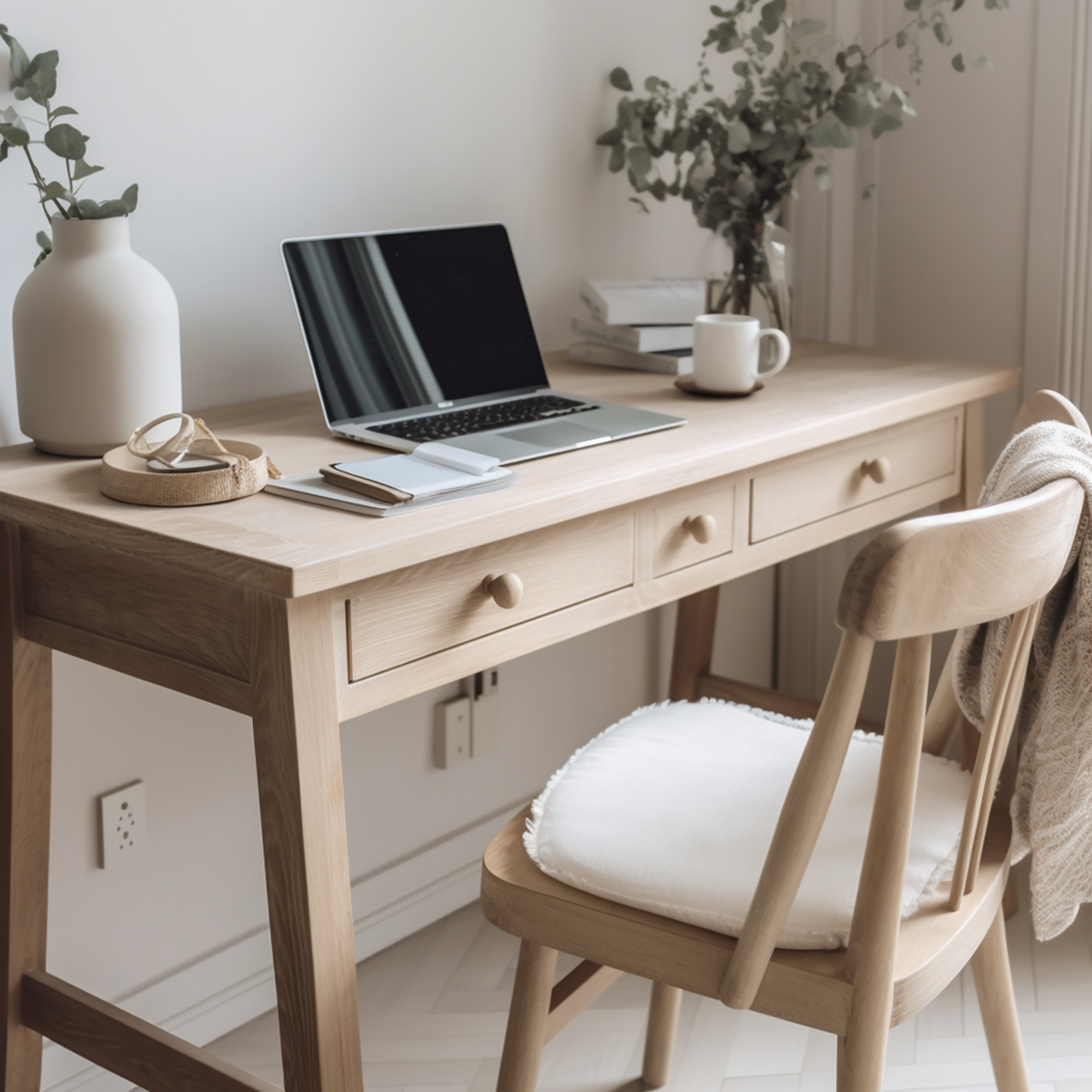
The room leaks into the work
Your workspace is not separate from the business. It shapes how long you can focus, how tired you are by late afternoon, whether you dread sitting down. Even when the job is mostly on a screen, the pile at the edge of your vision pulls attention.
A workable desk is not a set for strangers. It is the table, corner, or spare room that supports real days — crumbs, parcels, bad weeks included. Square footage matters less than what stays within reach.
Friction is expensive
Cables you trip on, mugs that need washing before you can start, papers that glare at you when you open the laptop — each one is a small tax. Remove a few and Monday morning gets lighter. The desk will not do the work for you; it can stop getting in the way.
Hustle culture still sells “more on the desk means more serious.” Often the opposite is true. Fewer things shouting for attention means fewer decisions before the real task.
You are not copying a Pinterest board
Warm wood and cream might be your thread; grey and one plant might be someone else’s. The test is simple: does it look like one person chose what is here? Random freebies and mixed eras read as noise even when each piece is fine on its own.
Palette, texture family, or one repeated shape can hold the scene together. You do not need everything new. You need fewer stray objects that do not belong to how you actually work.
Start with the surface you use
No renovation required. Clear what you work on this week. Move out what does not earn its place in arm’s reach. Sentimental clutter can live where you do not stare at it while thinking.
Space on the desk really is space in your head — not because it is mystical, because your eyes stop scanning for the next thing to fix.
Tools that fit the day
Notepads
Lists, fragments, phone numbers from a call. Pick a layout that matches your handwriting — tight lines versus wide margin, grid versus blank. If the grid fights you, you will avoid the pad without knowing why.
One primary pad in play beats six half-started blocks. Finish or clear before you add another.
Desk pads
Border for the work area: mouse, mug, quick figures from a quote. Protects the surface and catches the scribbles that do not belong in a “nice” notebook. If it sits in the same family as your cards and books, the desk reads quieter.
Size it so you are not shuffling every few minutes if you use a mouse.
Notebooks
Longer thought — plans, client notes, projects that need pages. Mark spines lightly if you run several: personal, client A, long build. One fuller book usually beats a shelf of thin starters you never return to.
Turn the volume down
Too many colours and focal points tug even when you are not looking straight at them. Softer palette, fewer objects, more open surface — the mind gets somewhere to land.
Love decor? Rotate instead of displaying everything at once. Wallpaper on the screen counts too; pick something that does not fight the physical desk.
Boring systems beat clever ones
Tray for post. Drawer for cables. One slot for paper that still needs doing. Plain words, real relief.
A sixty-second close-down — cup away, pens one place, tomorrow’s list visible — outlasts the filing fantasy you abandon by February. Design for how you behave. If you never file the day mail arrives, a weekly sweep beats daily perfection.
Sofa and kitchen days
Not every day is a desk day. A small tote or tray — charger, pad, pen — means moving work does not mean reinventing the pile. The habit that matters is knowing where things go when work stops, not which room you are in.
Let the desk look like your brand
You do not need logos on every object. The colours you use in PDFs and packaging can show up in what you see while you work. On video calls people glance behind you; a background that resembles your site is enough to signal the same person runs the whole thing.
You are not building a TV set. You are avoiding a jarring gap between “how she posts” and “how she works.”
Perfect is not the point
Work changes; the table changes. Aim for support — sitting down feels possible — not a frozen magazine shot. Life still lands: forms, parcels, hard weeks. Nudge the space back toward calm without turning tidying into a second job.
One change at a time
Surface, habit, or purchase — pick one, let it settle, then the next. Buying the whole vision in one cart costs money and often yields half-used props. Maybe this month is cable tidy and one notepad; next month, a desk pad that matches.
Light and air
Natural light where you can; a warm lamp where you cannot — it changes how colour reads on paper and how long your eyes stay comfortable. One plant or one object you love is enough; a jungle is optional.
Shared homes
Same table as family? Agree one zone during work hours — mat, tray, corner — so “I am working” is clear without a daily argument. Small boundary, big relief.
What “enough” looks like
You do not need a desk that is only for the camera. You need room to think, focus that does not feel frantic, and a day that moves without tripping over your own stuff.
Photo the desk when it feels good. Use it as a compass when clutter creeps back. You are not chasing sterility; you are remembering the version of the room where work felt least obstructed.
Some people need silence; others need a low hum they know well. Choose on purpose — not a shuffle playlist that jars mid-email.
If you want a few desk pieces that sit quietly with the rest of your print, explore desk and studio stationery →