Why Minimalist Branding Stationery Works for Small Businesses
A calm, minimal approach to branding stationery helps small businesses look cohesive without visual noise—clear message, intentional materials, quiet confidence online and in hand.
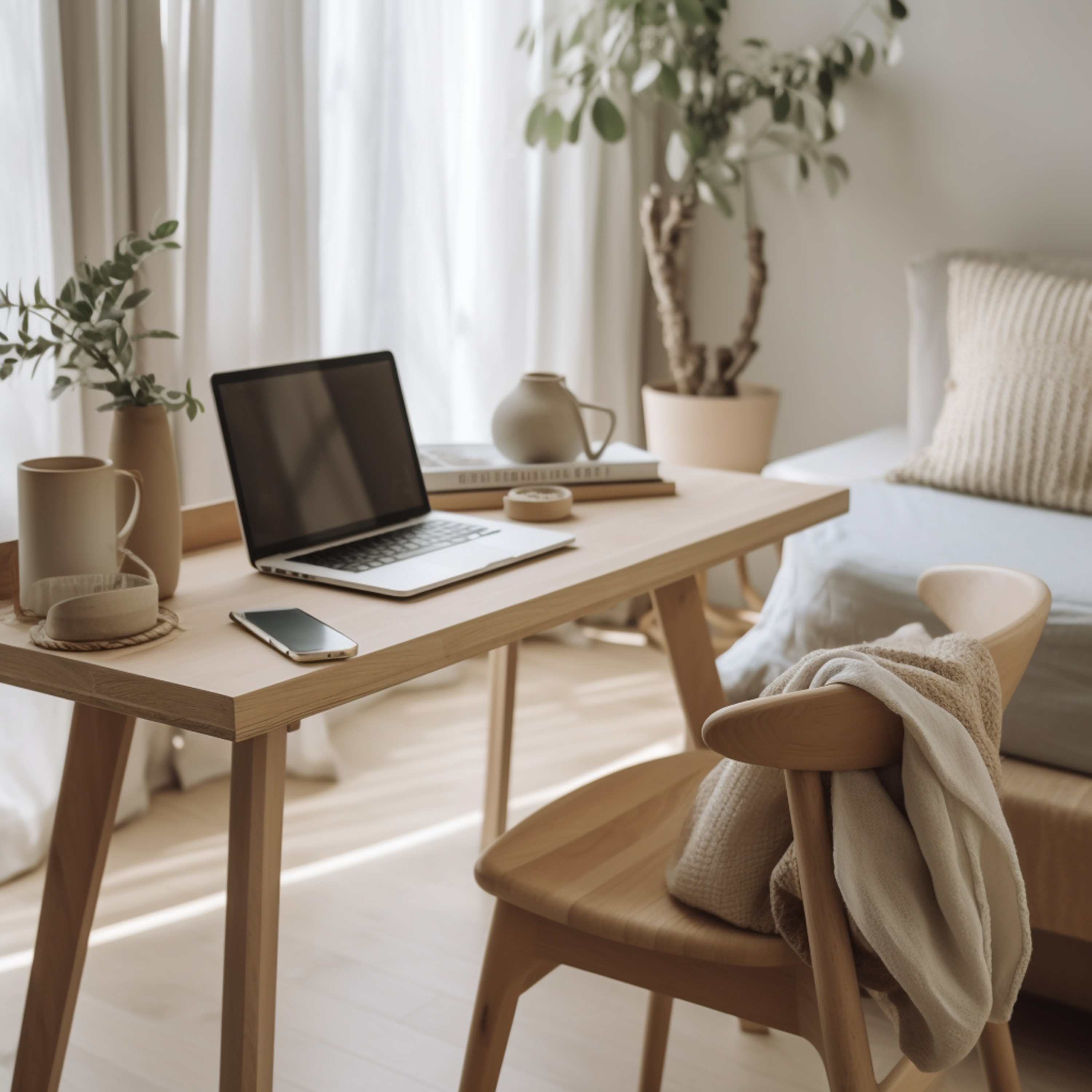
A calm, minimal approach to branding stationery helps small businesses look cohesive without visual noise. It allows your message to land clearly, your materials to feel intentional, and your brand to show up with quiet confidence—both online and in hand.
What “minimalist” really means for print
Minimalism in stationery is not about stripping everything back for the sake of it. It is about clarity. Fewer competing elements, one considered type hierarchy, generous spacing, and a restrained colour palette that supports rather than distracts from your content.
In practice, this means your business card, flyer, or packaging insert can be understood in seconds. That matters—whether someone is pausing at a market stall in the rain or opening a parcel at their kitchen table between other tasks.
Think of your print as a quiet frame. Your words, your product, and the small human touches—like a handwritten note—carry the warmth. The layout simply holds everything in place. When done well, it signals care, quality, and intention without ever needing to announce it.
There is also a cultural nuance here. In the UK especially, understatement often reads as trustworthy. A well-spaced, calmly designed card can feel more considered than one trying to say everything at once. Minimalism is not about doing less—it is about editing well.
Cohesion beats one-off “hero” pieces
A single beautiful design is not enough if everything else around it feels disconnected. Cohesion—across all your printed materials—is what builds recognition over time.
When your business card, invoice, thank you note, and flyer share the same visual language, something subtle happens: people begin to recognise your brand before they even read your name. That quiet familiarity builds trust.
It is also far more practical. Instead of redesigning from scratch each time, you are working from a system. The same margins, fonts, spacing, and palette carry across everything. That saves time, reduces decision fatigue, and makes reordering straightforward.
A helpful starting point is a “reference pair”: your business card and one other frequently used item. Everything else should feel like it belongs alongside them—no friction, no visual argument. A cohesive system—where business branding and marketing materials share the same visual DNA—extends that idea across everything you send out.
If something feels off, it usually is. Often it is a new colour creeping in, or an extra font added “just this once.” Those small shifts add up quickly.
Practical benefits for small, women-led businesses
Minimalist stationery often aligns naturally with women-led brands that value warmth, clarity, and approachability. It feels modern without becoming cold, and professional without tipping into corporate.
There is a quiet confidence in leaving space on the page. When information is easy to scan and nothing feels crowded or apologetic, clients sense clarity and self-assurance. For service-based businesses in particular, this can mirror the experience you offer—calm, thoughtful, and well held.
Minimal systems are also kinder to budgets. You print what you need, when you need it. You avoid large batches becoming obsolete, and you can adapt gradually as your business evolves.
It helps to think in terms of real usage. How many cards do you actually hand out in a month? How many parcels do you pack? Ordering in line with your true rhythm keeps things efficient—and avoids cupboards full of outdated print.
Minimalism is not about having fewer touchpoints; it is about having the right ones.

Where friction usually appears (and how to avoid it)
The most common issue is inconsistency between imagery and layout. A calm, minimal design cannot compensate for photography that feels unrelated—whether too harsh, overly styled, or from a completely different visual world.
Keep your imagery aligned with your print: soft, natural, and consistent in tone.
Another common slip is overcrowding. Especially on business cards, there is a temptation to include everything. In most cases, less works better. One clear way to contact you is enough. If needed, a short link or QR code can carry the rest.
Seasonal or event-specific pieces can also drift off-brand. A Christmas flyer or workshop poster does not need an entirely new visual identity. It can still sit comfortably within your existing palette and typography.
Consistency matters most when pieces are seen together—which is exactly how customers experience them.
Templates that still feel personal
Working with templates does not mean losing your voice. In fact, it often strengthens it.
When the layout is consistent, your words have more space to feel human. A single thoughtful sentence can replace multiple lines of generic copy. A small note about materials, process, or booking can say far more than a dense list of services.
One of the biggest temptations is to redesign simply out of boredom. But boredom often signals that something is working. Familiarity is what builds recognition.
If you do want to evolve your stationery, do it gradually. Change one element at a time—a shift in tone, a refined colour, a slightly different spacing system—so you can keep what already works.

Paper, finish, and the tactile experience
Minimalist design places more emphasis on how things feel in hand. Without heavy graphics, the paper and finish do more of the work.
Uncoated stocks with a subtle texture, heavier card weights, and soft-touch finishes all add to that sense of quiet quality. These details are often what people remember, even if they cannot quite name them.
Matte and soft-touch finishes tend to suit neutral palettes best. Gloss can feel too sharp against softer tones like stone, sage, or warm grey.
If you are unsure, ordering a small sample pack or proof can make all the difference. What looks subtle on screen often feels much richer in real life.
And if you are posting items across the UK, it is worth considering durability too. A slightly thicker card or textured finish can hold its presence even after a cold delivery or a few hours on a doorstep.
Where to start
If you are building or refining your stationery, begin with the pieces your customers interact with most—typically business cards, thank you notes, and packaging inserts.
From there, create a simple one-page set of “brand rules”: your core colours, fonts, spacing approach, and logo placement.
This becomes your anchor. Whenever something new comes up—a collaboration, event, or printed insert—you can refer back to it and decide quickly, without overthinking.
Minimalism is not restrictive. It is a steady framework that allows your brand to grow without losing its sense of self.
When you are ready to grow the set, browse the full branding stationery hub and add the next matching piece in the same visual language.
A final note
If you ever feel unsure, lay your current pieces out together—on a table, beside your packaging, in natural light. Then step back slightly.
Do they feel related? Not identical, but connected—like they belong to the same calm, considered world?
If yes, you are on the right track.
If not, you likely do not need a full redesign—just a gentle realignment.
Minimalist branding is, at its core, a kindness to your working week. Fewer decisions, fewer inconsistencies, and more clarity—leaving you with the space to focus on the work that actually grows your business.
Let your stationery hold that quiet consistency for you, season after season.