Industrial interior design: 9 ways to soften brick, steel and concrete
Exposed brick, tall steel windows and concrete underfoot. Here’s how to keep everything you love about industrial style, and make it feel like home.
Rachel Hannah
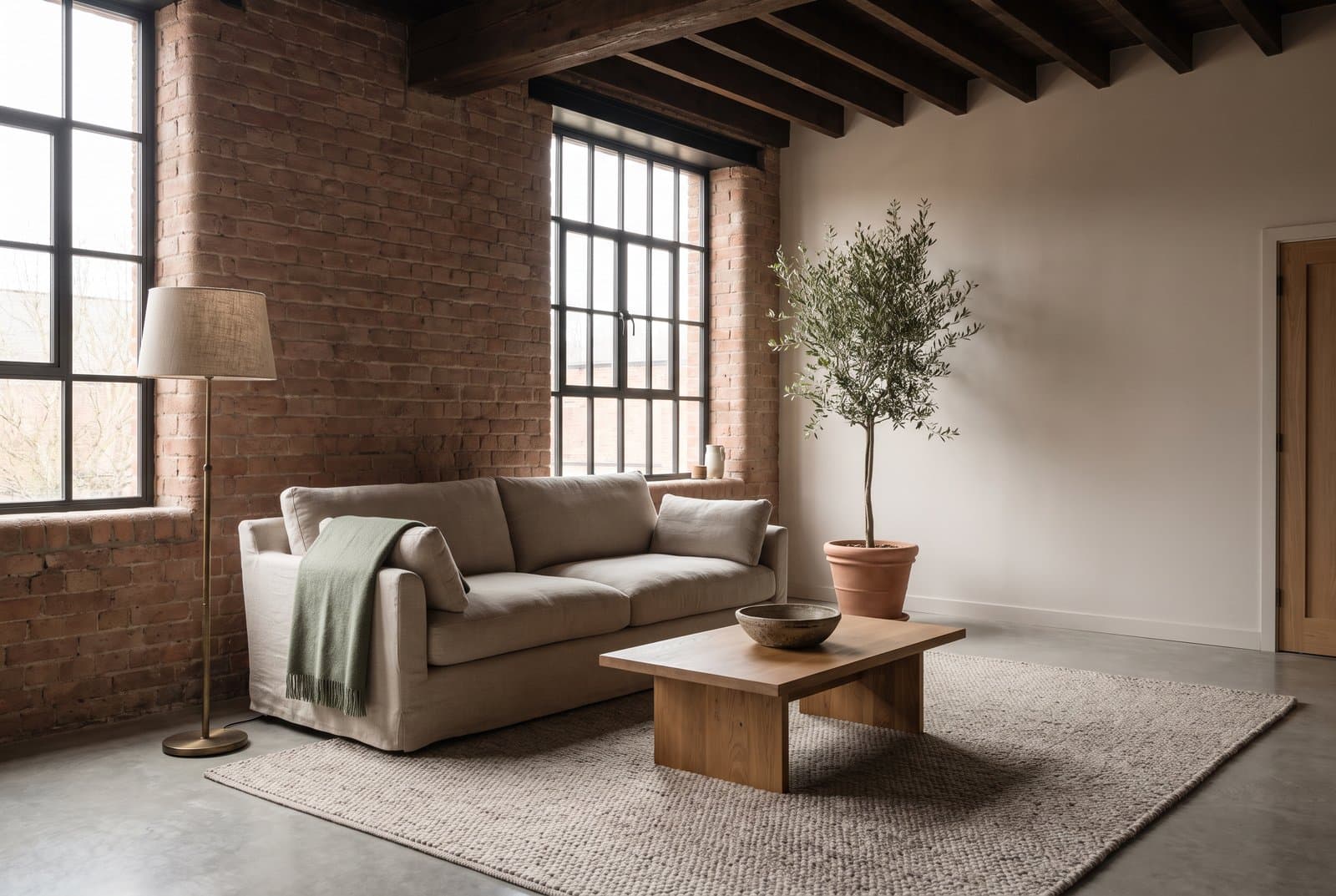
Industrial interiors have some of the best bones of any style. Exposed brick, tall steel windows, high ceilings, timber beams and concrete floors. They’re honest, generous spaces, full of character and light.
But they can also feel hard, echoing and cold, especially on a grey British afternoon. The good news is that the warmth is easy to add, and none of it means hiding the character you fell for.
Where industrial style comes from
The look began with real industrial buildings. From the 1960s, artists in New York moved into empty factories and warehouses in neighbourhoods such as SoHo, drawn by the space, the light and the low rents. They kept the brick, the beams and the big windows, and loft living was born.
Britain has its own industrial heritage. Warehouses along the London docks, textile mills in the north of England and old factories in cities across the country have been turned into homes. Many of them have the tall, slim steel windows that British makers such as Crittall made famous.
What defines the industrial look
Exposed brick and timber. Steel, iron and other raw metals. Concrete floors and walls. Large, open-plan rooms with high ceilings. Big windows with slim frames. And a feeling of honesty, with the building’s structure left on show rather than hidden away.
Why industrial can feel cold
Almost every surface in an industrial room is hard. Brick, concrete, metal and glass reflect sound, so rooms can echo. They’re cool to the touch. And the classic industrial lighting, bare bulbs and metal shades, can feel harsh rather than cosy.
Add a palette of grey and black, and the result can feel more like an office than a home. The trick is to keep the bones and soften everything around them.
9 ways to soften brick, steel and concrete
1. Bring in warm wood
Oiled oak, walnut or elm, in a dining table, a coffee table, open shelves or a wide floorboard. Wood is the quickest way to warm up an industrial room, and it sits beautifully against brick.
2. Layer soft textiles
A big wool rug on the concrete, linen curtains at the steel windows, a deep sofa in linen or wool, and throws you want to curl up in. Textiles also soak up sound, so the room stops echoing.
3. Warm the metal
Industrial rooms often lean on black steel. Keep the windows as they are, but for lamps, handles and fittings, try aged brass or bronze. They have the same honest, working feel, with far more warmth.
4. Choose softer light
Bare bulbs and metal shades look striking but can feel harsh. Mix in linen or paper shades, table lamps and floor lamps at different heights, all with warm bulbs. Light the brick from below or the side, and its texture comes alive in the evening.
5. Zone the open space
Big open rooms feel calmer when they’re divided into smaller places. A rug defines the sitting area, a low pendant the dining table, a bookcase or a curtain a quiet corner. Each zone feels more intimate than the room as a whole.
6. Add plenty of green
A large olive or fig tree in a clay pot, trailing plants on a high shelf, herbs on a deep windowsill. Plants soften hard lines and bring life to a room full of mineral surfaces. Industrial windows usually let in plenty of light, which plants love.
7. Warm up the palette
Swap grey and black for brick, clay, oat, stone and soft green. Let the brick set the tone, and choose everything else to sit warmly beside it.
8. Add a few curves
Industrial rooms are full of straight lines: beams, window bars, rows of brick. A round dining table, a curved sofa, an arched mirror or a globe pendant softens all those edges and makes the room feel more relaxed.
9. Choose handmade pieces
Stoneware lamps, a woven basket for logs, a hand-thrown bowl on the table. Handmade things bring the human touch a big, hard-edged room needs, and they sit happily beside the honest materials already there.
Industrial style in a non-industrial home
You don’t need a warehouse. In a Victorian terrace, an exposed brick chimney breast or a steel-framed glazed screen between two rooms can bring in some industrial character. In a new build, a concrete-look worktop and a few honest materials do the same. Choose one or two industrial touches and let the rest of the room stay soft.
Industrial and its cousins
Industrial sits close to urban chic, the polished city look I’ve written about in Urban chic interior design: 5 ways to warm up city living. And its love of honest materials runs through Modern rustic living room ideas: 9 ways to keep it light.
If this is the home you’d like
Rustic luxury, the one style Sunday Ambience designs in, shares industrial style’s honesty about materials, and adds warmth and calm. If you live in a converted building, or love the industrial feel, tell me and it becomes part of the brief.
The Sunday Signature package is £1,495 for one room, designed in real depth, with photorealistic visuals and a concept walk-through with Rachel, live or pre-recorded. If you’d prefer to begin more gently, Room Ambience is the lighter option at £495, with one photorealistic visual of your finished room.
Or simply send me a few photographs and tell me what isn’t quite working. I read every message myself, and there’s no obligation of any kind.