What is rustic luxury? Why matt, natural rooms feel so calm
Luxury was never meant to shout. Here’s what defines rustic luxury interior design, why matt beats gloss, and how to bring that quiet, natural warmth into your own home.
Rachel Hannah
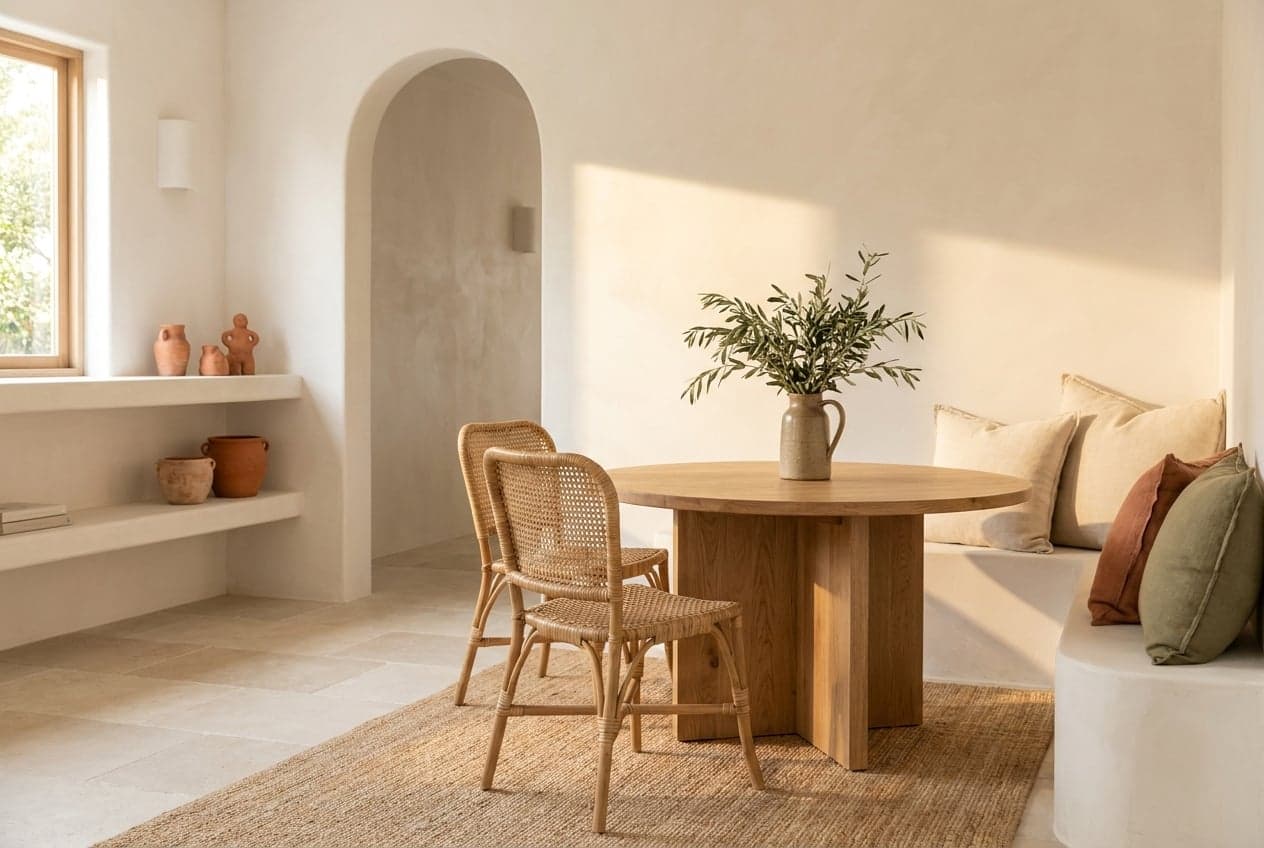
Rustic luxury interior design sounds like a contradiction, and that tension is exactly what makes it work. Rustic suggests something rough and humble. Luxury suggests something polished and costly. Put together, they describe a home that feels calm, natural and deeply comfortable, without ever needing to announce what it cost.
It’s the look Sunday Ambience is built around. Honest matt materials, rustic warmth, a good deal of empty space, and far fewer, far better things. The feeling is widely known as quiet luxury, and the name fits: luxury that never raises its voice. Here’s what defines it, and how to bring some of it home.
What most of us picture when we hear ‘luxury’
Ask most people to describe a luxurious room and they’ll describe something shiny. Polished marble, mirrored furniture, lacquered surfaces, a chandelier catching the light from every angle. And a great deal of all of it.
The appeal is easy to understand. Shine reads as expensive at a glance, which is rather the point of it.
But a room like that asks to be looked at, where a well-designed room asks to be lived in. Shine shows every fingerprint, dates quickly, and rarely helps anyone rest.
Rustic luxury is the opposite instinct entirely. Nothing in the room is trying to impress you. It’s simply good, and you feel that long before you could say why.
What rustic luxury interior design actually means
It comes down to three things: quality, restraint, and materials that age well.
Quality means things made properly, from materials that are exactly what they appear to be. Solid wood, not a printed imitation of it. Wool, linen and stone, chosen because they feel good under the hand.
Restraint means knowing when to stop. A muted palette, very little pattern, and no single piece talking over the rest.
Ageing well matters most of all. The best natural materials look better at ten years old than they did when they were new. That is the real test of understated luxury, and it has very little to do with what something cost.
It’s why rustic luxury interiors share so much with quiet luxury. Both are understated, and neither is ever shiny or flashy. What matters is the feeling: a calm home, where everything in it has earned its place.
Where the rustic comes in, and why matt beats gloss
The rustic half is what keeps the luxury honest. Rustic luxe, or luxe rustic if you prefer it that way round, is quiet luxury with a rustic soul: the same restraint, with more warmth, more texture and more age in it.
A glossy surface throws light back at you. A matt one takes the light in and softens it, which is why matt finishes leave a room feeling so settled. It’s the difference between a mirror and a pebble.
That is why the same handful of honest materials appears in rustic luxury interiors again and again.
Limewash and chalky paint, which give a wall depth and gentle movement where a flat sheen gives none. Wood left unlacquered, or simply oiled, so that you can see and feel the grain. Linen, creases included. Honed stone in place of polished. Clay and unglazed ceramics. And aged metals, brass or bronze that has been allowed to dull and darken, instead of chrome and mirror finishes.
The great strength of luxe rustic interiors is that they forgive you. A mark on an oiled oak table becomes part of the table. A scratch on a lacquered one is simply damage. One of those rooms lets you relax, and the other has you following your guests around with a coaster.
Fewer, better things
The other half of rustic luxury is what you leave out.
Empty space isn’t something waiting to be filled. A bare stretch of wall, a clear surface, room to walk around a chair: these are what allow the good things to be seen. One beautiful old chest with space around it will always look more luxurious than five pieces competing for attention.
Negative space is a design choice though, not an empty room, and the difference lies in intention. An empty room feels unfinished. A room with space in it feels as though someone decided, quite deliberately, that this was enough.
It’s why good design begins with what you already own. Most rooms need editing far more than they need shopping. And when something new really is needed, the rule holds every time: buy less, choose well, and look to vintage first.
How it differs from its neighbours
Rustic luxury is one look, not a mix of styles, though it’s easily mistaken for a couple of its neighbours. Here’s how to tell them apart.
Minimalism is about reduction, sometimes for its own sake, and at its strictest it can feel cool and a little austere. Rustic luxury sits much closer to warm minimalism. The restraint is still there, but comfort comes first, and texture does the work that ornament would otherwise do.
Modern rustic interior design is the nearest neighbour of all: beams, stone and rough timber, tidied up with cleaner lines. Rustic luxury takes the restraint a step further. Fewer pieces, a softer palette, and all of the warmth without the room turning into a theme.
How to bring it into your own home
None of this needs a renovation, and most of it can be done slowly. Here’s where to begin.
Edit before you buy
Take out anything you neither use nor love, then live with the space for a fortnight. You may well find the room needed less, not more.
Choose matt wherever you’re given the choice
Paint, tiles, taps, handles, picture frames. Each time you’re offered a sheen, take the quieter option. It is the one change that shifts a room furthest.
Let wood look like wood
If you’re choosing a table or a chest of drawers, look for an oiled or waxed finish over a thick lacquer. Older pieces often have exactly this quality already, which is one good reason to look to vintage first.
Change what you touch every day
Door handles, light switches, the kitchen tap, your bed linen. Quality is felt through the hands far more often than it’s seen, so this is the place to spend first.
Keep to one calm palette
Three or four related tones, borrowed from natural materials: chalk, oat, stone, clay, a soft green. Let texture provide the interest that colour usually would.
Lower the light
A single bright ceiling light flattens everything, however lovely the materials. A few lamps at different heights, with warm bulbs, let matt surfaces glow softly in the evening.
If you rent, work with what moves
You may not be able to limewash a wall, but linen curtains, a wool rug, a wooden lamp and a few clay pots carry the feeling perfectly well, and they all leave with you. There’s more on this in 7 ways to make a rented home feel like yours.
Leave one surface empty
A windowsill, a shelf, the end of a worktop. Resist filling it. That small pause is often what makes the rest of the room feel calm.
Rustic luxury outside too
The same thinking holds once you step outside. A garden, a courtyard or a balcony can be every bit as quiet as a sitting room.
Choose terracotta and stone pots over shiny glazed ones, and a few generous pots over a scatter of small ones. Let timber weather to silver instead of staining it every spring. Keep the planting soft and loose, with grasses and herbs that move in the wind.
Even a small balcony can hold this: one weathered bench, two good pots, and some space left around them. If you’d like to know how the studio designs outdoor spaces from a distance, it’s explained in Online garden design: can it really work from a few photos?.
If this is the home you’d like
Rustic luxury isn’t something to finish in a weekend. It’s built slowly, one good decision at a time, and there’s no hurry at all.
If you’d like some help with it, Sunday Ambience designs entirely online, from your photographs and a few measurements, with every design led and approved by me. I’ve explained how that works in What is eDesign? Online interior design in plain English.
The Signature Interior Design package is £1,495 for one room, and a second or third room can be added at £995 each. If you’d prefer to begin more gently, Room Ambience is the lighter option at £495.
Or simply send me a few photographs and tell me what isn’t quite working. I read every message myself, and there’s no obligation of any kind.