Japandi interior design: 7 ways to make it warm, not cold
Japanese calm, Scandinavian comfort, and a room that can turn cold if you’re not careful. Here’s how to get Japandi right, and keep it warm.
Rachel Hannah
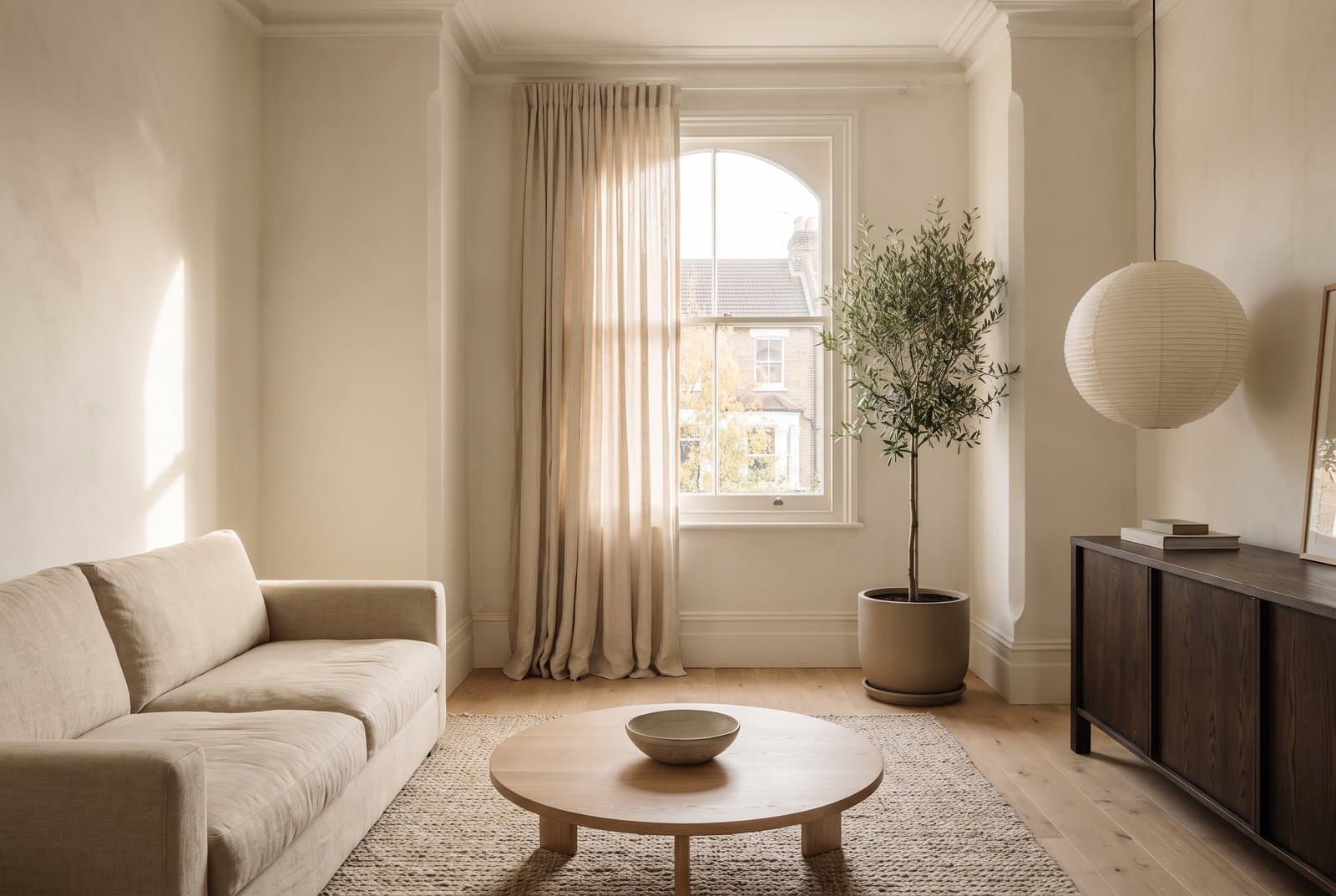
Japandi has become hugely popular in recent years, and it’s easy to see why. It promises the calm of a Japanese room with the comfort of a Scandinavian one: clean lines, natural materials, very little clutter and a feeling of quiet.
But there’s a catch. Done badly, Japandi can feel bare, grey and chilly, more like a waiting room than a home. Here’s what the style really is, why it so often goes cold, and seven ways to keep yours warm.
What is Japandi?
The name joins Japan and Scandinavia, and so does the style. The two traditions have a surprising amount in common: a love of simplicity, natural materials, good craftsmanship and calm, uncluttered rooms. Japandi brings them together in one look.
Each side gives something different. From Japan comes restraint, low furniture, darker woods, handmade pottery and the idea of wabi-sabi, finding beauty in the imperfect. I’ve written about all of that in Japanese interior design: 9 secrets to a calmer, quieter home.
From Scandinavia comes comfort. Soft textiles, paler woods, practical furniture and the Danish idea of hygge, the cosy contentment of a warm room on a dark evening. Scandinavian design was made for long, dark winters, which is why it has so much to teach us here in Britain.
Why Japandi can feel cold
Most cold Japandi rooms go wrong in the same few ways.
The first is grey. Cool grey walls, grey sofas and grey floors drain the warmth out of the natural materials the style depends on.
The second is too little. Minimal is not the same as empty. Without texture, a bare room just looks unfinished.
The third is one flat beige. When every surface is the same colour and the same smoothness, the eye has nothing to rest on.
And the fourth is harsh light. A single bright overhead light flattens everything, and a Japandi room depends on soft, low light more than most.
7 ways to make Japandi warm, not cold
1. Start with warm white walls
Choose an off-white with a little warmth in it, chalky rather than bright. Limewash or clay plaster is even better, because its gentle movement gives a plain wall depth. There’s more in Limewash walls: what to know before you pick up a brush.
2. Use two woods, one pale and one dark
This is the heart of Japandi. Pale oak or ash from the Scandinavian side, and one or two darker pieces, a sideboard, a table or a stool, from the Japanese side. The contrast is gentle, and it stops the room falling flat.
3. Layer soft, natural textiles
Linen on the sofa and at the windows, wool underfoot, a cotton or wool throw folded over a chair. Keep the colours quiet, oat, stone, soft clay, and let the texture do the work.
4. Keep the furniture low and generous
A low sofa you can sink into, a low round table, nothing tall in the middle of the room. Low furniture makes a room feel calmer and larger, and generous seating keeps it from feeling austere.
5. Light it like an evening at home
Turn off the overhead light. A paper lantern, of the kind Isamu Noguchi made famous with his Akari lights, gives a soft glow, and two or three lamps at different heights do the rest. Warm bulbs, always.
6. Choose handmade over perfect
One hand-thrown bowl, a stoneware jug, a woven basket. Handmade things carry the marks of the person who made them, and that small imperfection brings a room to life.
7. Bring in one living thing
A potted olive, a fig, or a single branch in a vase. Choose something with a beautiful shape and give it space, so it reads as part of the design. If your room is short on light, keep it close to the window and choose a plant that copes with less sun.
Japandi in a British home
Japandi suits British homes far better than its showroom pictures suggest. A Victorian terrace, with its tall windows, fireplace and cornicing, takes the look beautifully. The period details add warmth and character, and Japandi’s simplicity lets them shine. A newer home with plainer walls gives a calm, clean backdrop to start from.
In either, two things matter more here than in brighter climates: warm whites, never cool ones, and plenty of soft textiles for the darker months.
Japandi and rustic luxury
Japandi and rustic luxury, the one style Sunday Ambience designs in, are close cousins. Both love honest, matt materials, quiet colour, handmade things and space to breathe. Rustic luxury is a little warmer and more weathered, with aged brass, old timber and more of the countryside about it.
So if you love Japandi, it sits very comfortably within a Sunday Ambience design. Tell me that’s the feeling you’re after, and it becomes part of the brief.
If this is the home you’d like
The Sunday Signature package is £1,495 for one room, designed in real depth, with photorealistic visuals and a concept walk-through with Rachel, live or pre-recorded. If you’d prefer to begin more gently, Room Ambience is the lighter option at £495, with one photorealistic visual of your finished room.
Or simply send me a few photographs and tell me what isn’t quite working. I read every message myself, and there’s no obligation of any kind.