Scandinavian interior design: 11 Nordic secrets for a cosier British home
Pale wood, soft white walls, candlelight and a warm stove on a dark afternoon. Here’s what Scandinavian homes know about winter, and how to borrow it.
Rachel Hannah
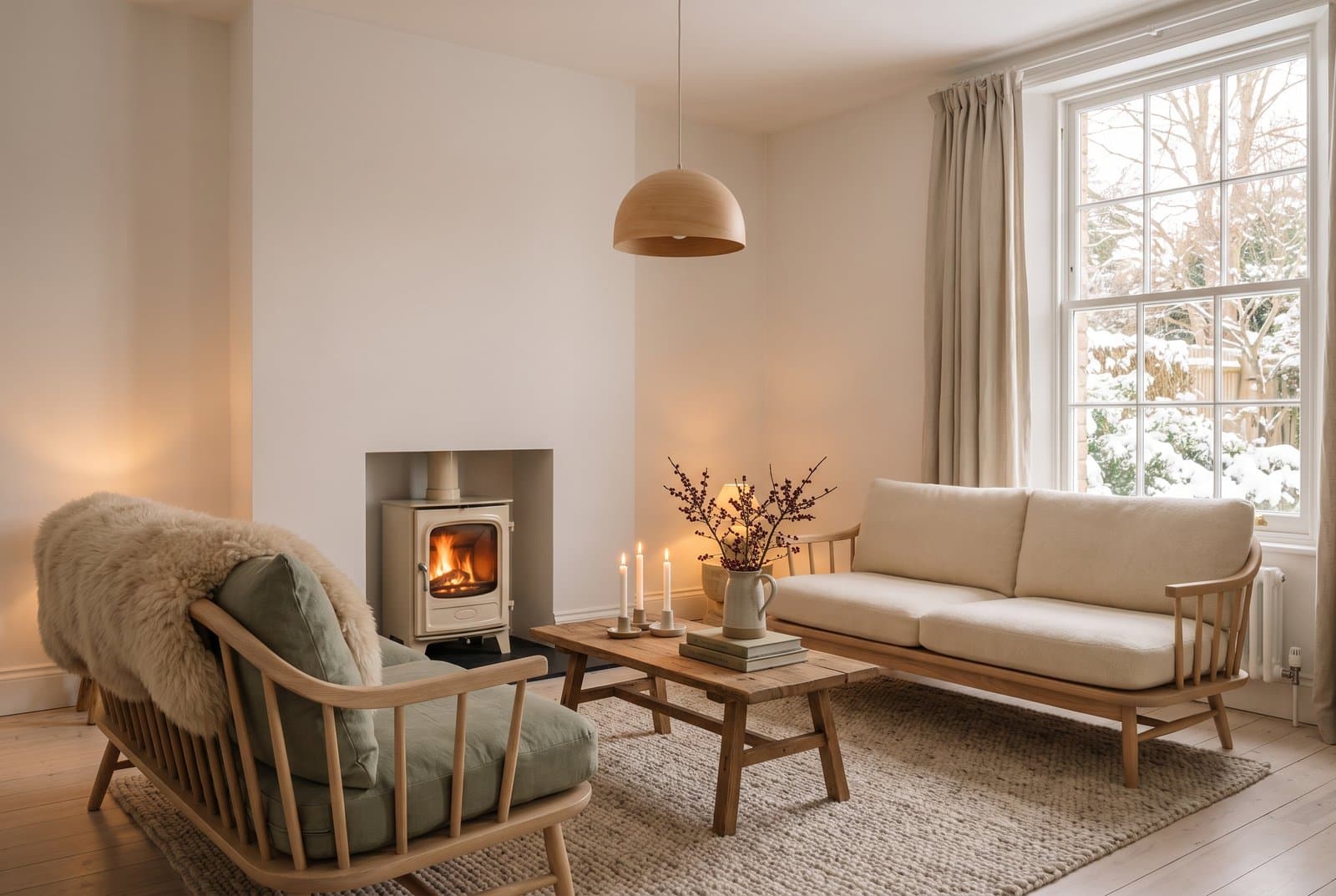
In the far north of Europe, winter days are short and dark. Scandinavians have spent centuries learning to make homes that feel light, warm and welcoming through it, and the results are some of the calmest rooms there are.
Our winters aren’t as long, but our skies are often just as grey. So Scandinavian design has more to teach British homes than almost any other style.
What is Scandinavian interior design?
Scandinavian design comes from Denmark, Sweden and Norway, and the wider Nordic family includes Finland and Iceland too. It’s known for pale wood, soft white walls, simple, beautifully made furniture and natural textiles, all arranged with very little clutter.
Its roots go back a long way. In Sweden, the painted, pale Gustavian furniture of the late 1700s set a taste for light and grace. Around 1900, the artist Carl Larsson and his wife Karin, a designer and weaver, filled their home in Sundborn with colour, light and handmade textiles, and paintings of it shaped Swedish style for generations.
In the middle of the 20th century, designers such as Alvar Aalto in Finland and Hans Wegner in Denmark made simple, beautiful furniture in natural wood, built to be used every day. That’s still the heart of the look: good design for ordinary life.
Two words worth knowing
Hygge is the Danish idea of cosy contentment: candles lit, a warm drink, a blanket and good company on a dark evening. Lagom is a Swedish word for just the right amount, not too much and not too little. Between them, they sum up Scandinavian design rather well.
11 Nordic secrets for a cosier British home
1. Make the most of every bit of daylight
Scandinavian rooms are arranged around the window. Keep it clear, hang curtains wide so they don’t cover the glass, and choose light, plain fabrics. A mirror opposite or beside a window will carry the light deeper into the room.
2. Choose a warm white, not a cold one
Soft white walls are classic Scandinavian, but in British light a brilliant white turns blue and chilly. Choose a white with a little warmth in it, and keep walls, ceiling and woodwork close in tone, so the room feels like one calm shell.
3. Bring in pale wood
Ash, birch, beech and pale oak, oiled or soaped rather than varnished. Pale floorboards are the foundation of many Scandinavian rooms, and simple wooden chairs and tables do the rest.
4. Light for the dark hours
Scandinavians are known for their love of candles, and their rooms are lit from low down, with lamps and pendants rather than a single bright ceiling light. Use warm bulbs, light candles on dark afternoons, and let pools of light make the room feel cosy.
5. Layer wool, sheepskin and linen
Texture is what keeps a pale room from feeling cold. A wool rug, a sheepskin over a chair, linen at the windows and a heavy knitted throw on the sofa. Keep the colours soft and natural.
6. Keep the furniture simple and useful
Fewer pieces, each well made and comfortable. A Scandinavian room is never cluttered, but it is never bare either. Lagom, just the right amount.
7. Make a place for the fire
A wood-burning stove is at the centre of many Nordic homes. If you don’t have one, a cluster of candles in the fireplace, or a reading chair with a lamp and a blanket, does a similar job.
8. Bring the outside in
Branches in a jug, a pot of herbs on the windowsill, a bowl of pine cones in winter. Scandinavians love their landscape, and a little of it is always indoors.
9. Add colour gently
Scandinavian rooms aren’t only white. Carl Larsson’s home was full of soft blues, greens, reds and yellows. Choose one or two soft colours, perhaps a faded blue on a cupboard or a dusty green on a chair, and let them sing against the pale backdrop.
10. Choose things made by hand
Weaving, woodwork and pottery run deep in Nordic homes, from Karin Larsson’s textiles to simple turned bowls. A handwoven throw, a wooden spoon on the kitchen shelf or a stoneware jug brings warmth that nothing mass-made can.
11. Make the door ready for the weather
Norwegians talk of friluftsliv, open-air living, and get outside whatever the weather. A bench by the door, hooks for coats and a basket for boots and hats make going out easy, and coming home cosier.
Where Scandinavian style can go wrong
The most common mistake is grey. A grey sofa, grey walls and grey rug in a north-facing British room can look cold and flat. The second is too little: without texture and warm light, a white room can feel clinical.
And the third is buying it all from one flat-pack catalogue. The real Scandinavian look is about good materials and things made to last.
Scandinavian and its cousins
Scandinavian design is one half of Japandi, which I’ve written about in Japandi interior design: 7 ways to make it warm, not cold. It also shares a great deal with modern rustic, which I’ve covered in Modern rustic living room ideas: 9 ways to keep it light. And its love of fewer, better things runs through Minimalist interior design: 9 ways to live with less and love your home more.
If this is the home you’d like
Rustic luxury, the one style Sunday Ambience designs in, shares Scandinavia’s love of honest materials, soft light and calm. If you love the Nordic feel, tell me and it becomes part of the brief.
The Sunday Signature package is £1,495 for one room, designed in real depth, with photorealistic visuals and a concept walk-through with Rachel, live or pre-recorded. If you’d prefer to begin more gently, Room Ambience is the lighter option at £495, with one photorealistic visual of your finished room.
Or simply send me a few photographs and tell me what isn’t quite working. I read every message myself, and there’s no obligation of any kind.